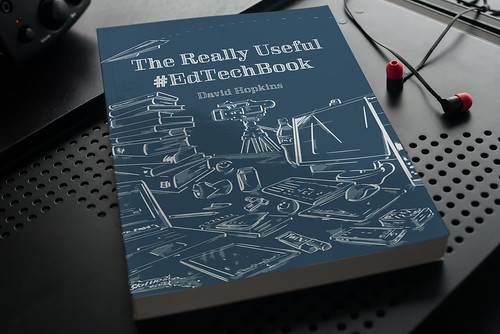
 Way back in July/August 2014, David Hopkins (@hopkinsdavid) approached a number of people involved in EdTech, myself included, about an idea he had to collaboratively write a Really Useful EdTech Book. The book is now available for download and will be published on proper paper within the next couple of days.
To find out more about it, and to download your copy, visit David's blog. It's a fabulous collection of chapters from practitioners, researchers and professionals in the area of EdTech, and has a foreword by our own Catherine Cronin. There are some very positive reviews already on this site, including one from Steve Wheeler.
David has done an amazing job in bringing this all together. I don't know about the other authors but I don't think I met a single deadline. His patience is beyond belief, and he still seems to be talking to me!
For me, it was a great opportunity to be part of such a collaboration, which includes some people that I know quite well from twitter, one or two that I've actually met in person, and some others that I'm just getting to know.
One part of the whole process that I particularly enjoyed was being "interviewed" by David back in October. Using a google doc to support communication, David put questions to me and I responded. As it turns out, I was travelling at the time, so it was a great opportunity to really use google docs on a collaborative project. The interview was published in November.
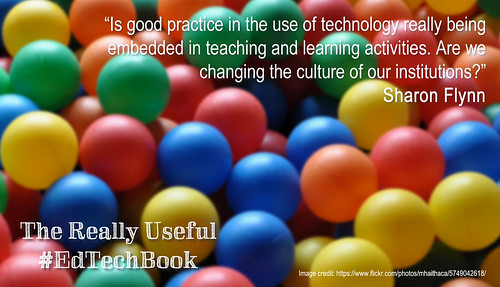 It also gave me a chance to reflect on the topic of my own chapter, which asks if the work of the learning technologist is having any long term effects on the culture of the university. While we can "measure" our productivity in terms of numbers of workshops, numbers of people trained, support tickets closed, projects brought to completion, etc, how do we know if we're making a longer term impact?
I'd really like to thank David Hopkins for including me in this collaboration. It has been an exciting and novel experience. I think we can all be proud of the Really Useful #EdTechBook.
Tweet
Comments
Post a Comment